Choose Your Platform: YouTube
I chose to analyze YouTube for this assignment because it’s been part of my life for as long as I can remember. Back in middle and high school, I’d come home every day and open YouTube before even starting homework. I watched guitar tutorials, anime edits, and creators talking about things I didn’t know how to express myself. When thinking about how social media tools are changing our social connections, YouTube feels like the most obvious place to start since I am sure that’s where the majority of us came from, even before mainstream platforms like TikTok. It’s where people go to learn, to feel less alone, or sometimes to distract themselves from their daily stress and look for entertainment.
I wanted to find out how YouTube as a digital platform influences social connections in different ways. To do this, I searched for three types of videos: a professional analysis video (“Social Media and The Psychology of Loneliness” by Academy of Ideas), a “people’s speaker” type video (“Social Media is Making Everyone Lonely” by Hamza), and a typical vlogger video (Jazlyn Mychelle’s “IM BACK!!! | JAMAICA VLOG!!!”). Each video represents a different way people connect on YouTube whether it’d be through learning, listening, or watching someone’s life.
What is YouTube’s Background and Cultural Reputation?
YouTube was created in 2005 and is now the world’s largest platform to share videos with billions of users world-wide. It’s become a place where people literally build their careers, learn some skills (whether it’d be DIY, guitar, art, you name it), and share their lives. For many of us, it shaped our childhoods. It was the first place we saw gamers streaming for hours, music videos going insanely viral for no reason, or people sharing “a day in my life” videos that felt almost too personal for strangers to watch. It was surely an interesting place to be in at that time. Some might say YouTube became the new TV, but it’s different because it doesn’t just show polished entertainment or infomericals hired professionally. Literally anyone could be posting a video about anything where there’s nothing stopping you (as long as YouTube guidelines are followed), and it showed real people’s lives. Or at least what looks like real life.
But culturally, YouTube has a mixed reputation. It’s known for having some good form of educational videos and diverse communities. At the same time, it’s criticized for its algorithm pushing those sensational or extreme content just to keep people watching. As Hamza says in his video, social media is like getting a fix in order to obtain some arbitrary artificial socialness. I think that’s something worth thinking about.
Walkthrough Findings: Affordances and Design Choices
First Impressions and Algorithm
When I first open YouTube, it feels familiar. It’s cluttered yet organized in a way, but also comforting. The home page shows a mix of videos I expect: gaming videos, guitar videos, motivational insightful videos, music videos, anime/manga edits, typical controversial videos, and sometimes random viral clips I don’t care about. It’s like YouTube knows parts of me well but also pushes me things many others watch.
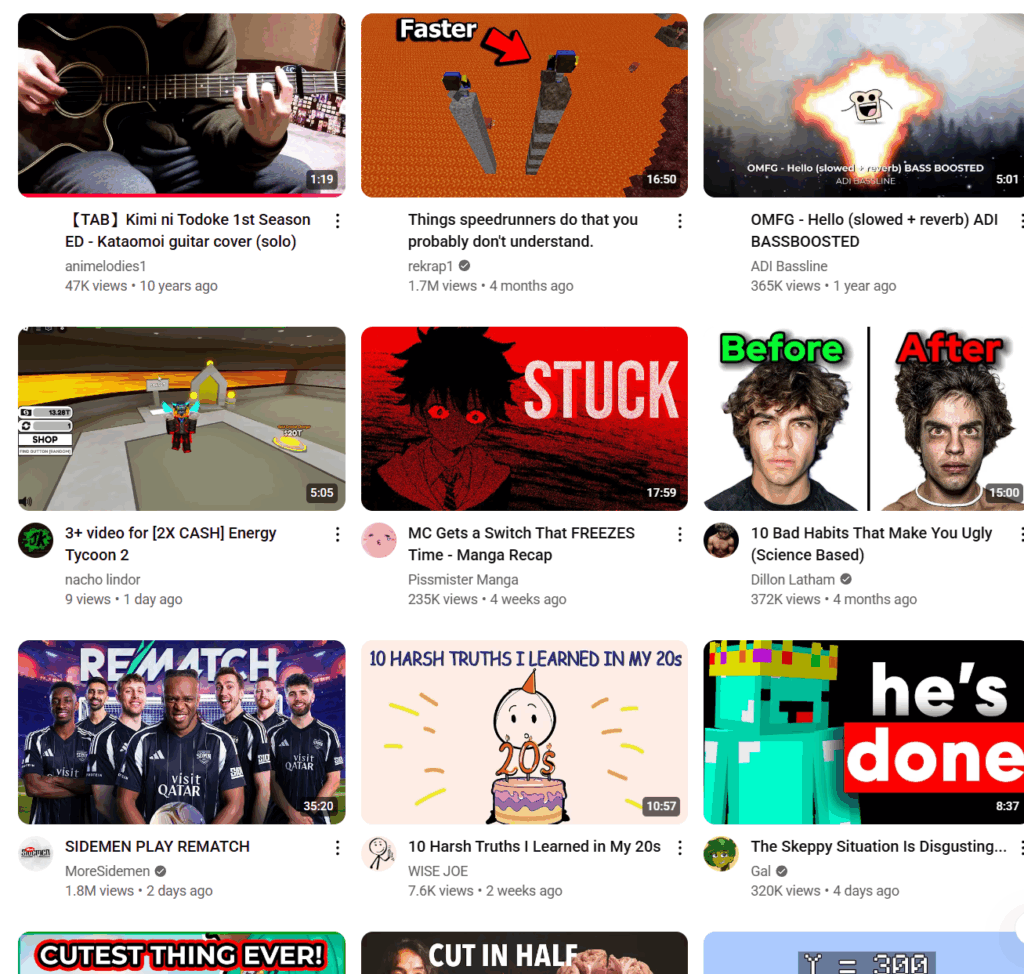
What YouTube Lets Us Do (and What It Doesn’t)
The enabling affordances are obvious. YouTube lets me:
- Watch videos on anything from how to fix my bathroom outlet which is broken for some reason and I can’t dry my hair to learning Japanese grammar.
- Comment and interact, even though I rarely do.
- Feel part of communities like when I binge a Minecraft series and read comments from other people enjoying the video.
But the restrictive affordances are subtle. YouTube doesn’t allow for deep conversations, or rather, the privacy and convenience in doing so. Comments are typically short (depends on the video if it’s entertainment or informative), fairly scattered, and it’s all public. Even if I reply to someone, it doesn’t feel like a real conversation. It feels more like building a public persona. The autoplay and endless recommendations restrict us from focusing deeply on one topic as our attention span simply wouldn’t allow us to stay in one place for too long. Instead, it’s like being pulled in multiple directions. I notice this every time I go to watch “just one video” and end up scrolling for an hour, feeling tired afterward.
Professional Video (Academy of Ideas)
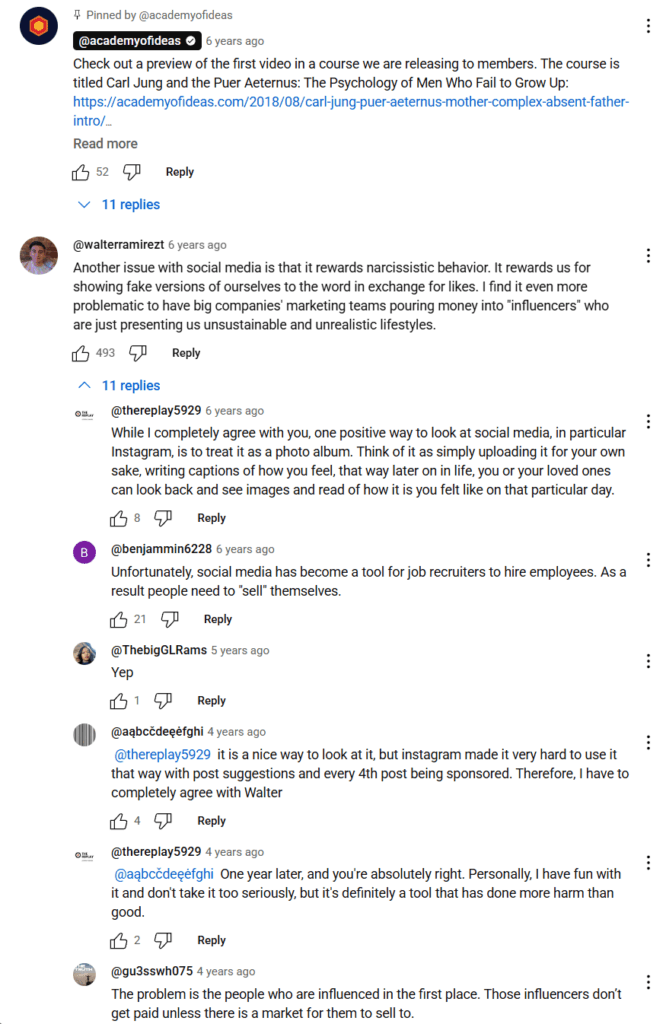
Watching Academy of Ideas felt like taking a class lecture. The video’s dark, minimalistic thumbnails stand out because they’re not flashy. The creator talks about loneliness not just as an emotional state but as an undeveloped sense of self that social media hides. He explains that loneliness often comes from feeling empty inside, not really knowing what you want or who you are. And social media becomes a place to build a fake version of yourself–that public persona I mentioned earlier–to avoid facing that emptiness. That idea felt heavy to me, but it’s honest. It made me think about how scrolling and posting can feel comforting for a moment, but deep down, it never really fixes anything in the long run. It makes me think of how sometimes, likes and comments feel like claps from a crowd that disappears once the video ends. YouTube allows for this kind of professional educational content, but at the same time, it restricts the in-depth engagement by making it too easy to skip away to something else, to something more entertaining when it gets too heavy or boring.
Looking at the comments under the video, I noticed that people weren’t just leaving random opinions. They were actually having real conversations, sharing how they quit social media and felt happier or how they struggled with the need to show off a fake version of themselves. Some even debated whether it was social media’s fault or the users’. It felt like a place where people dropped their online masks for a moment and just spoke honestly. I think that’s something YouTube does well sometimes. Even if we’re all strangers, seeing people share some small truths like that makes you feel a bit less alone.
“People’s Speaker” Video (Hamza)
Then there’s Hamza. His thumbnails are raw selfies or drawn selfies with simple text, like a friend sending you a personal video giving advice. In his video, he talks about how our generation is the loneliest in human history despite being the most socially connected ever. He explains that the more time we spend on social media, the lonelier we become because it replaces real life discomfort, challenges, and rejection with rushes of online attention. Listening to him felt different from Academy of Ideas. It’s less formal and more like hearing an older brother tell you hard truths. He says that social media gives us “artificial socialness” that actually makes us feel more isolated, even if we’re connected to thousands of people online. I think that’s why so many people listen to him. The platform allows for creators like him to act as mentors. But, it also restricts them from truly knowing viewers personally. It’s a one-way conversation.
Motivational Short (Jak Piggott)
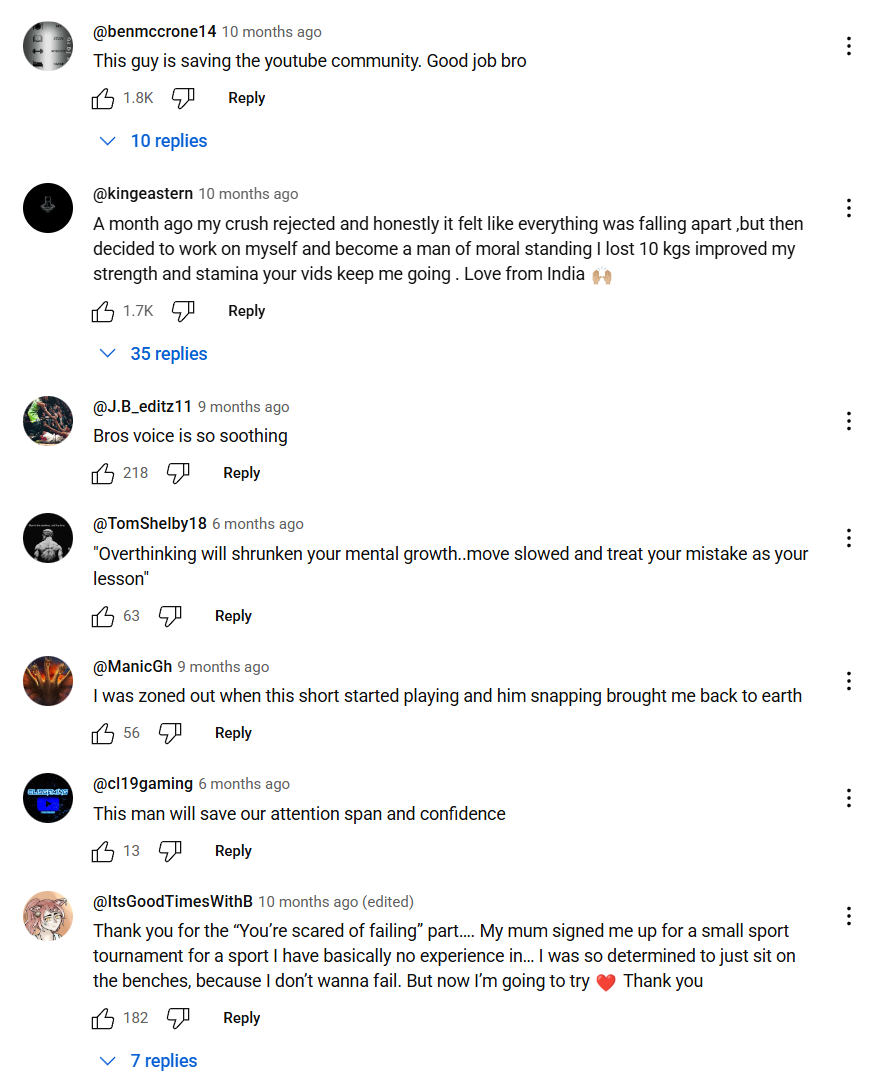
I also watched a YouTube short by Jak Piggott titled “Still Under 20? You Need To Hear This…” In it, he uses a foggy morning as an analogy for how life can feel unclear and scary when you don’t know what’s ahead. His deeper message was about courage, that even when you can’t see your full path, taking small steps forward each day is what clears the fog as your eyes will adjust. The comments under the video showed how this idea connected with people. Many shared their own fears about the future or how they felt stuck, but his words seemed to calm them. It felt like a quiet corner of YouTube where people were just trying to move forward together, one small step at a time.
Pleasant Family Vlog Video (Jazlyn Mychelle)
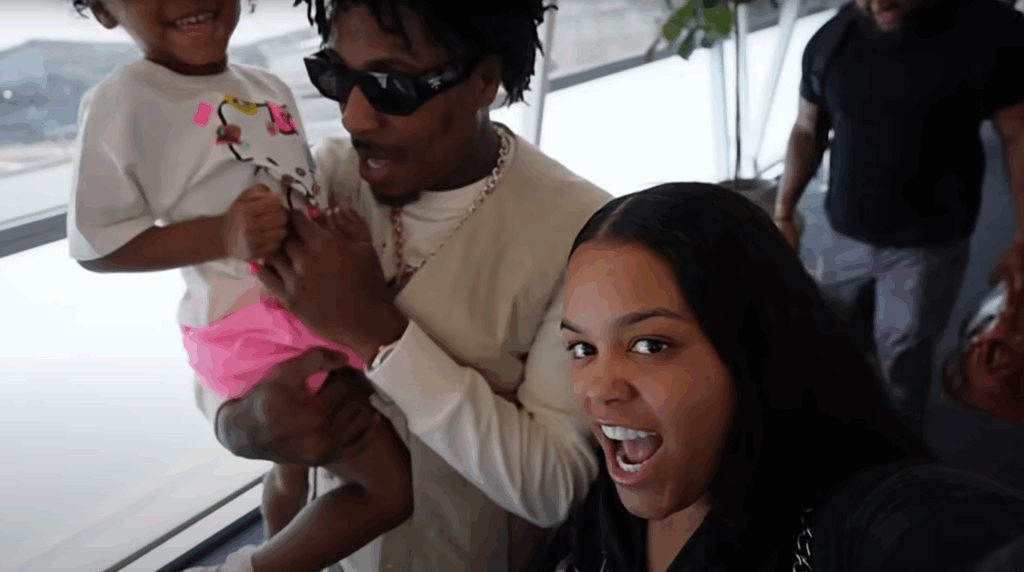
I watched a family vlog titled “IM BACK!!!|JAMAICA VLOG!!|JAZLYN MYCHELLE.” The video followed Jazlyn and her kids as they traveled to Jamaica for the first time. It wasn’t cinematic or overly edited, but it’s honest. She showed little moments like her kids eating fries on the beach, being nervous on the zipline, or calling her by her first name instead of Mommy (21:19) which I found adorable. The comments were supportive, with viewers saying things like “I love how yall had the kids with yall and still enjoyed yall self” or “I love this! Beautiful family”. Watching this felt calming in a way. Unlike videos that try to impress with money or drama, this one just showed simple family moments like eating beef patties, swimming with dolphins, sitting in the hot tub at night. It reminded me of how vlogs used to be when YouTube was more about sharing about your life rather than performing it. On a bigger level, family vlogs like this can create a sense of warmth online, though I also know there are criticisms about privacy and children’s rights in family vlogging culture. Still, at least in this video, it felt like viewers were just appreciating someone else’s happiness rather than comparing it to their own.
My Conclusion
YouTube has changed what connection looks like for our generation. It lets us learn, feel understood, and see into other people’s lives in ways that wouldn’t be possible without it. But it also makes it easy to avoid facing our own lives by watching others live theirs.
Watching these videos made me realize connection doesn’t always come from deep talks. Sometimes it’s just sharing small moments or feeling less alone when someone puts your feelings into words. Still, I think what Academy of Ideas said was right. If we don’t know who we really are, no amount of online connection can fix that emptiness.
In the end, I think YouTube’s influence on social connection is somewhere in the middle. It has the potential to be positive when we use it to learn, reflect, or understand ourselves better, but it can also become negative if we only use it to escape from real life. Maybe that’s the real challenge for us. Because when the screen turns off, the only person left to connect with is yourself.
Sources
- Academy of Ideas’ “Social Media and The Psychology of Loneliness”
https://www.youtube.com/watch?v=FQ40hdQVndI&t=51s - Hamza’s “Social Media Is Making Everyone Lonely”
https://www.youtube.com/watch?v=7-jD6zD61ME - Jazlyn Mychelle’s Jamaica Vlog
https://www.youtube.com/watch?v=Lca0aiBiwr0 - Jak Piggot’s motivational short
https://www.youtube.com/watch/gEkhSnF2XQY